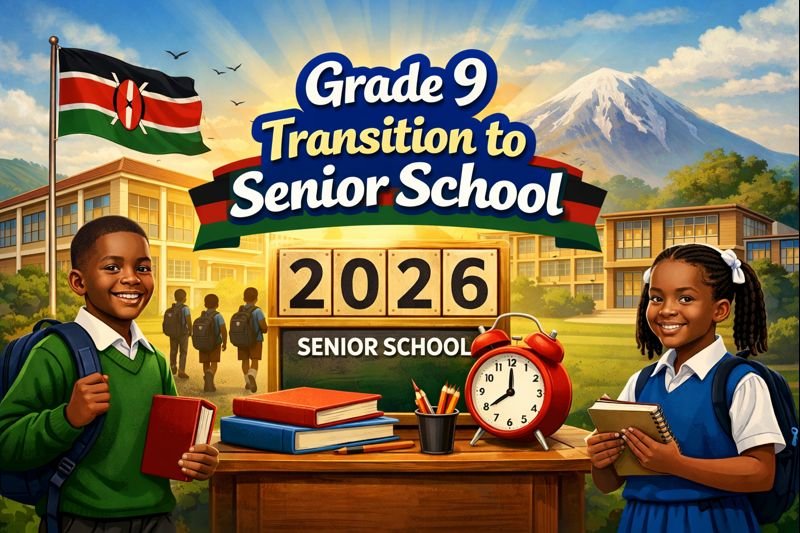
Kenya stands at the threshold of a historic educational milestone as approximately 1.2 million Grade 9 learners prepare to transition to senior secondary schools in January 2026. This marks the inaugural movement of the first CBC senior secondary cohort, representing the most significant education reform since the introduction of the 8-4-4 system in 1985.
The Ministry of Education has confirmed that Grade 10 learners will report to their respective senior schools on Monday, January 12, 2026, one week after other students return for the new academic year. This CBC transition update brings both excitement and anxiety for parents, students, and teachers as Kenya implements a completely new approach to secondary education that emphasizes career pathways, competency development, and practical skills over traditional rote learning.

Understanding the Historic Grade 9 Transition to Senior School
The Grade 9 learners placement process represents a fundamental departure from Kenya’s traditional education system. Unlike the old 8-4-4 structure where all Form One students followed identical curricula regardless of their interests or abilities, the Competency-Based Curriculum introduces specialized learning pathways designed to align education with individual talents, career aspirations, and national development needs.
Basic Education Principal Secretary Prof. Julius Bitok has assured that every Grade 9 learner will receive placement in senior school, stating that the ministry is developing comprehensive guidelines to ensure universal access. This commitment addresses one of the biggest concerns among parents worried about whether the education system can accommodate all 1.2 million learners simultaneously.
The transition affects learners who sat for the Kenya Junior School Education Assessment between October 27 and November 3, 2025. KJSEA results, released on December 11, 2025, formed the primary basis for senior school placement alongside School-Based Assessments accumulated throughout junior secondary school.
Senior school readiness has been a priority for the government, which has invested heavily in infrastructure development, teacher recruitment, and curriculum preparation. President William Ruto confirmed in December 2025 that the CBC program is fully funded and prepared for implementation, dismissing concerns about inadequate readiness.
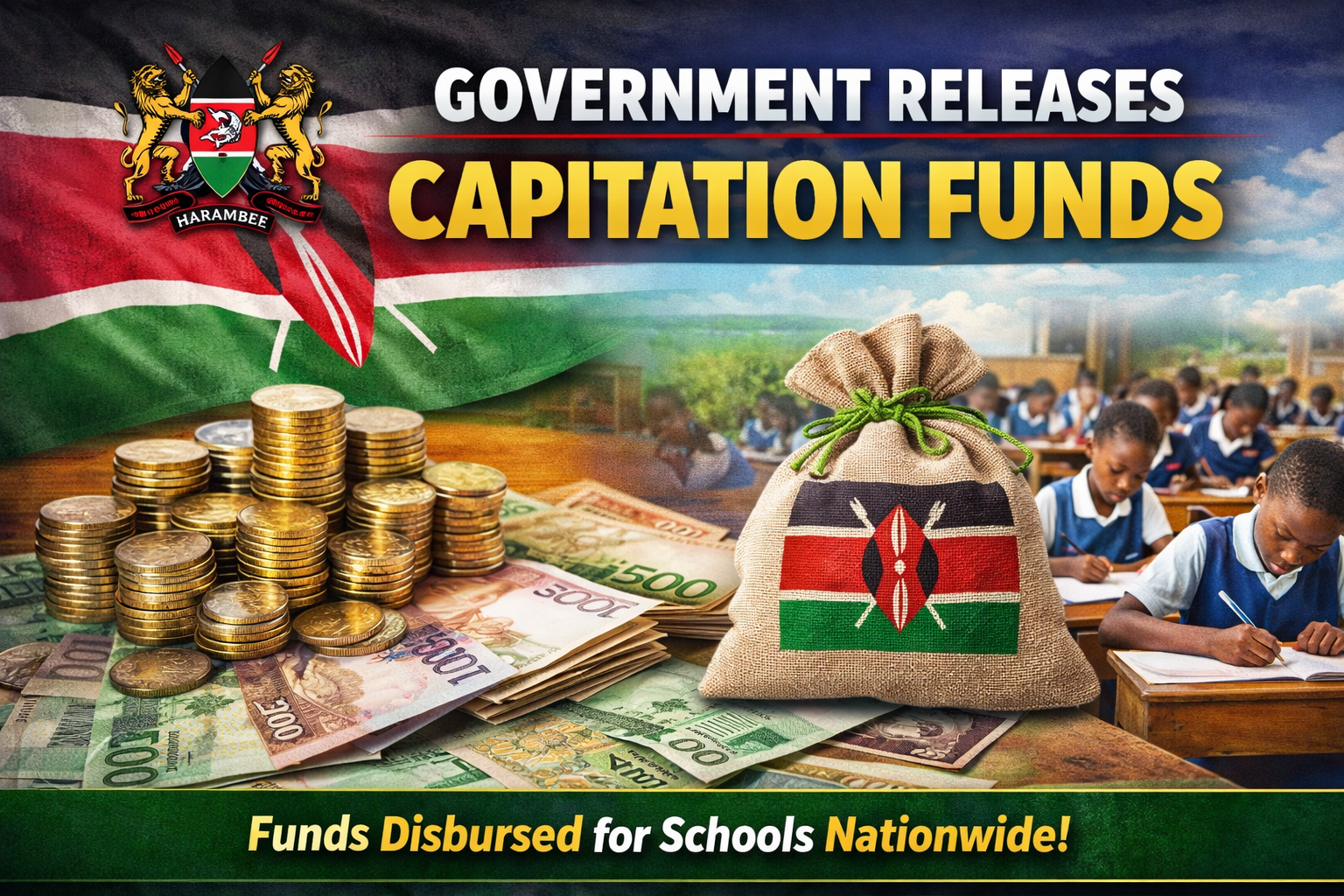
The government has undertaken several major initiatives to ensure smooth transition. These include constructing 23,000 new classrooms, recruiting 100,000 teachers since 2023 with 24,000 hired this year alone, completing 1,600 laboratories by March 2026, and releasing Ksh44 billion in capitation funds to support Term One operations.
The First CBC Senior Secondary Cohort: What Makes It Different
The first CBC senior secondary cohort will experience education fundamentally different from what previous generations encountered under the 8-4-4 system. Senior school spans three years—Grades 10, 11, and 12—compared to the four-year Form 1 to Form 4 structure of the old system.
Most significantly, learners no longer follow a one-size-fits-all curriculum. Instead, they specialize in one of three distinct pathways: Science, Technology, Engineering, and Mathematics (STEM), Social Sciences, or Arts and Sports Science. Each pathway connects to specific career clusters and professional opportunities, helping students develop relevant competencies from an early stage.
The assessment approach has also changed dramatically. Rather than relying primarily on high-stakes final examinations, CBC emphasizes continuous assessment throughout the learning period. Students are evaluated based on demonstrated competencies, practical projects, portfolios, classroom participation, and periodic assessments, providing a more comprehensive picture of student development.
Subject selection within pathways offers additional flexibility. Each learner studies seven subjects: four compulsory core subjects (English, Kiswahili or Kenyan Sign Language, Core or Essential Mathematics, and Community Service Learning) plus three elective subjects aligned with their chosen pathway. This structure allows personalization while maintaining essential foundational knowledge.
The Ministry of Education’s digital platform links over 350 professions to specific subject clusters, enabling learners to make informed choices based on career aspirations rather than random selection. A student interested in medicine pursues STEM with pure sciences focus, while an aspiring journalist selects Social Sciences with relevant combinations.
How Grade 9 Learners Placement Works Under CBC
The Grade 9 learners placement process operates through a sophisticated digital system designed to match students with appropriate schools and pathways based on multiple factors. Understanding this process helps parents navigate the transition more effectively.
Assessment Components:
Placement decisions combine two major assessment components with different weightings. School-Based Assessments contribute 40 percent of the placement score, reflecting continuous evaluation conducted throughout junior secondary school in Grades 7, 8, and 9. The Kenya Junior School Education Assessment contributes the remaining 60 percent, based on performance in the national examination sat in October-November 2025.
This blended assessment model aims to provide a more balanced evaluation of learner abilities than relying solely on a single examination. It recognizes consistent performance over three years while maintaining standardized national assessment standards.
Pathway Selection Process:

Between June 9 and June 30, 2025, Grade 9 learners selected their preferred pathways and schools through the Ministry’s online portal at selection.education.go.ke. Each learner chose one primary pathway and two alternatives, providing flexibility if their first choice proved unavailable due to capacity constraints.
For each selected pathway, students chose four schools across four different clusters, totaling twelve school choices per learner. The four clusters are: Cluster 1 (255 former national schools), Cluster 2 (755 formerly extra county schools), Cluster 3 (county schools), and Cluster 4 (sub-county schools).
The automated placement system then matched learners to schools considering KJSEA performance, School-Based Assessment scores, psychometric test results indicating pathway aptitude, learner preferences and school choices, equity considerations ensuring fair geographic distribution, and available school capacity and resources.
Priority Placement for Top Performers:
The Ministry established specific priority mechanisms to ensure high-performing students access quality boarding school opportunities. The top six learners per gender in each STEM track per sub-county receive priority placement in boarding schools of their choice. Similarly, the top three per gender in Social Sciences tracks and the top two per gender in Arts and Sports tracks secure boarding school placement.
This merit-based priority system aims to balance excellence recognition with equitable access across all counties and pathways, ensuring that talent is nurtured regardless of geographic location or socioeconomic background.
Senior School Categories and Pathway Options
Senior secondary schools have been organized into distinct categories to accommodate diverse learner needs and ensure appropriate placement aligned with interests, abilities, and career aspirations.
Pathway Classifications:
Schools are categorized as either Triple Pathway Schools or Dual Pathway Schools based on the subject combinations they offer. Triple Pathway Schools provide all three pathways—STEM, Social Sciences, and Arts and Sports Science—giving learners maximum choice within a single institution.
Dual Pathway Schools offer two pathways, typically STEM paired with either Social Sciences or Arts and Sports Science. This categorization allows schools to specialize in specific areas where they have adequate teaching capacity, laboratory facilities, and other essential resources.
According to Kenya Secondary Schools Association National Chairman Willy Kuria, more than 10,000 secondary schools will receive Grade 10 learners, with adequate space available following the phase-out of Form One admissions under the 8-4-4 system and the exit of Form Four candidates by January 2026.
Other School Categories:
Beyond pathway classifications, schools are further categorized by accommodation type (boarding, day, or mixed), gender (boys, girls, or co-educational), and special needs provisions for learners with hearing, visual, or physical impairments, as well as vocational senior schools for students with autism, cerebral palsy, cognitive difficulties, or deaf-blind conditions.
This comprehensive categorization ensures every learner receives placement in an environment suited to their specific educational needs and personal circumstances, promoting inclusive education across the entire system.
What the Three Career Pathways Mean for Students
The three career pathways represent distinct educational tracks designed to develop specific competencies aligned with different professional fields and national development priorities.
Science, Technology, Engineering, and Mathematics (STEM):
The STEM pathway focuses on developing competencies in scientific inquiry, technological innovation, engineering problem-solving, and mathematical reasoning. Learners pursuing STEM study core subjects plus three electives chosen from Pure Sciences (Biology, Chemistry, Physics), Mathematics (Advanced or Core), Computer Science, Technical subjects, and other STEM-aligned areas.
KJSEA results from 2025 indicated that 59.09 percent of candidates demonstrated potential for STEM pathways based on their performance in relevant subjects. This pathway prepares students for careers in medicine, engineering, information technology, architecture, scientific research, and technical professions critical to Vision 2030 and Kenya’s Digital Economy Blueprint.
Social Sciences Pathway:
The Social Sciences pathway develops competencies in critical thinking, social analysis, communication, and understanding of human societies, economics, and governance. Learners select three electives from subjects including History, Geography, Business Studies, Religious Education, Home Science, and related fields.
Performance data showed 46.52 percent of 2025 KJSEA candidates exhibited aptitude for Social Sciences. This pathway prepares students for careers in law, journalism, public administration, economics, social work, education, diplomacy, and other professions requiring strong analytical and communication skills.
Arts and Sports Science Pathway:
The Arts and Sports Science pathway nurtures creative expression, artistic talent, physical abilities, and sports competencies. Learners choose electives from Music, Drama, Visual Arts, Dance, Physical Education, Sports Science, and related creative fields.
KJSEA data indicated 48.73 percent of candidates showed potential for Arts and Sports pathways. This track prepares students for careers in creative industries, entertainment, sports management, physical education, performing arts, design, and other fields where creativity and physical abilities are central.
Importantly, pathway potential percentages do not force placement. Students can choose pathways based on interests and aspirations even if their KJSEA results suggest different strengths, ensuring learner agency remains central to the system.
Senior School Readiness: Infrastructure and Resources
The question of senior school readiness has dominated public discourse as Kenya prepares for this unprecedented transition. The government has made substantial investments to ensure adequate infrastructure and resources support quality learning.
Classroom Construction and Facilities:
The Ministry of Education reports constructing 23,000 new classrooms across the country to accommodate the influx of Grade 10 learners. These facilities provide modern learning environments replacing the mud-wall structures that characterized many schools in previous decades.
Additionally, 1,600 new science laboratories are scheduled for completion by March 2026, ensuring students in STEM pathways access appropriate practical learning facilities. These laboratories are distributed across counties to promote equitable access to quality science education regardless of geographic location.
Schools have adequate space because the senior secondary level hosts only three grade levels (10, 11, and 12) compared to four under the old system, and Form One admissions were suspended to create room for the CBC cohort.
Teacher Deployment and Training:
The Teachers Service Commission has recruited 100,000 teachers since 2023, with 24,000 hired this year and 25,000 promoted to support the transition. TSC Chief Executive Officer Eveleen Mitei confirmed in December 2025 that the commission is fully prepared to facilitate smooth learner transition.
However, concerns persist about teacher preparedness for the new curriculum. Teachers in several counties report that training for instructors expected to handle Grade 10 has been insufficient, leaving many feeling unprepared for the new senior school structure. KUPPET member JT Mbugua noted that many instructors have not been adequately retooled, with some leaving training sessions more confused than prepared.
The Teachers Service Commission conducted capacity-building programs for more than 9,000 principals, equipping them with tools and skills on career pathways ahead of the transition. These training sessions aimed to ensure school leaders can guide learners effectively through pathway selection and specialization.
Financial Resources and Capitation:
The government has released Ksh44.245 billion as Term One capitation funds, ensuring schools have operational budgets before learners report. This represents a capitation rate of approximately Ksh22,000 per student, maintaining parity with previous years and avoiding fee increases that might burden parents.
Education Cabinet Secretary Julius Ogamba has repeatedly assured that school fees for learners progressing to senior secondary will not be increased, emphasizing the government’s focus on strengthening access and equity in education.
The Digital Infrastructure: KEMIS and Placement Systems
Kenya’s CBC transition relies heavily on digital systems that manage student data, track performance, facilitate placement, and ensure transparent resource allocation.
Kenya Education Management Information System (KEMIS):
KEMIS serves as the central database for all learners, schools, and education transactions in Kenya. All senior schools, both public and private, must admit Grade 10 students through KEMIS, ensuring standardized data management and preventing unauthorized admissions.
School principals are prohibited from entering any learner into KEMIS before the student physically reports to school. Daily online reporting will be monitored through the system, allowing the Ministry to track enrollment patterns and identify potential issues in real-time.
The Principal Secretary emphasized that strengthening KEMIS ensures every school receives funding according to actual student numbers, addressing historical problems with ghost schools and inaccurate enrollment data that complicated resource allocation.
Online Placement and Selection Portals:
The Ministry operates two primary digital platforms for the Grade 9 transition. The selection portal at selection.education.go.ke enabled learners to choose pathways and schools during the June 2025 selection window. The placement portal at placements.education.go.ke provides access to placement results and joining instructions.
These systems automate the complex matching process between 1.2 million learners and available school capacity across multiple pathways, ensuring fair, transparent, and efficient placement that would be impossible through manual processes.
Parents and learners access placement information online using the learner’s assessment number. Schools with declared vacancies can be viewed through county directors of education, and placement changes follow structured protocols through official channels.
Challenges and Concerns About the Transition
Despite government assurances and substantial investments, several concerns persist as Kenya approaches this historic transition.
Textbook Supply and Publisher Debts:
The Kenya Association of Manufacturers has raised alarm about government debt owed to publishers and printers for CBC textbooks. CEO Tobias Alando warned that this debt severely strains the financial operations of printers and manufacturers, posing significant risk to the continued CBC rollout, especially for Grade 10 learners.
Publishers remain unpaid for Grade 8 and 9 books already delivered to public schools, preventing them from settling printing costs. These payment delays have pushed printers into financial distress, forcing some to default on tax obligations and supplier credit, raising questions about timely textbook availability for Grade 10.
Teacher Preparedness Gaps:
Multiple reports indicate that teacher training for the senior secondary level remains inadequate. Many educators express feeling unprepared to handle the new curriculum structure, specialized pathways, and competency-based assessment methods.
Teachers report that training sessions were too brief, lacked practical focus, and failed to provide clear guidance on implementing the new system effectively. This preparation gap could affect teaching quality and student learning outcomes during the critical first year of implementation.
Parent Confusion and Information Gaps:
Many parents remain confused about how the CBC system works, what the different pathways mean for their children’s futures, and how to support learners through this transition. Information dissemination has been inconsistent, with urban parents generally better informed than those in rural areas.
The complexity of pathway selection, subject combinations, and the digital placement process creates anxiety for families with limited digital literacy or internet access. Some parents worry their children made uninformed choices during the June 2025 selection window.
Infrastructure Variations Across Counties:
While national statistics suggest adequate infrastructure, significant disparities exist between counties and between urban and rural schools. Some schools, particularly in marginalized areas, still lack adequate laboratories, libraries, computer rooms, and other facilities essential for quality CBC delivery.
These infrastructure gaps risk creating a two-tier system where learners in well-resourced schools receive significantly better education than those in under-resourced institutions, perpetuating historical inequalities despite CBC’s equity objectives.
Grade 10 Placement Review and Changes
The Ministry of Education has established procedures for families seeking to review or change their children’s placement before school reopening.
Second Placement Review Window:
A second placement review window opened from January 6 to January 9, 2026, providing four days for families to request placement changes before the official Grade 10 reporting date on January 12. This represents the final opportunity for adjustments before the academic year begins.
The review process operates entirely through digital systems, with requests initiated through specific channels rather than directly by parents. Requests must be submitted either through the learner’s former junior school or at the senior school of interest, with the Head of Institution at either institution submitting the application through the Ministry’s placement portal.
Placement Revision Rules:
Each learner is allowed only one placement revision. Once a new placement letter is generated following approval, the decision becomes final and irreversible. This policy underscores the importance of carefully considering all factors before requesting changes.
Priority shall be given to learners who had earlier selected the schools they are requesting, with approvals by the Ministry based on senior schools’ documented capacity. This prevents gaming of the system while accommodating legitimate needs for placement adjustment.
Upon request approval, joining instructions become accessible online. At no time shall schools issue printed letters for replacement cases, ensuring all placement changes are documented through official digital systems for transparency and accountability.
Legitimate Grounds for Review:
Placement reviews require verifiable grounds for reconsideration. Factors such as health conditions requiring specific school environments, family circumstances affecting boarding versus day school needs, or specific educational needs may justify review requests.
However, mere preferences or dissatisfaction with assigned schools without substantial justification may not constitute sufficient grounds for approval. The Ministry must balance individual preferences with system-wide capacity constraints and equity considerations.
What Parents Should Do to Prepare
With Grade 10 reporting scheduled for Monday, January 12, 2026, parents have limited time to complete essential preparations ensuring their children transition smoothly.
Verify Placement Information:
Download and print your child’s placement letter from the Ministry portal at placements.education.go.ke using their assessment number. Verify all details including the assigned school name, pathway, subject combinations, school code, and reporting instructions.
Confirm the school’s exact location, especially if your child has been placed in a school outside your home county. Establish contact with the school administration to clarify any specific requirements, orientation schedules, or unique instructions for new Grade 10 students.
Gather Required Documents:
Prepare all necessary documentation your child will need for admission. Essential documents include the official placement letter from the Ministry portal, KJSEA result slip showing performance levels, birth certificate or national identification card, medical records or immunization certificates if required by the school, and passport-size photographs for school records.
For learners with special needs or health conditions requiring accommodation, prepare relevant medical documentation supporting any necessary adjustments or support services.
Purchase Uniforms and Learning Materials:
Obtain your child’s new school uniform according to the specific institution’s requirements. Contact the school or check their website for detailed uniform specifications, as these vary across different schools.
Purchase required learning materials including textbooks for the chosen pathway and subject combination, exercise books and stationery supplies, scientific calculators and mathematical instruments for STEM students, and any pathway-specific materials like art supplies or sports equipment.
Some schools may provide textbooks through government supply while others require purchase. Clarify your school’s policy to avoid unnecessary expenses or missing essential materials.
Financial Planning and Fee Payment:
Review the school’s fee structure and payment schedule. Former national schools charge up to Ksh53,554 annually for boarding while county and sub-county schools have lower fee structures based on their respective categories.
Arrange payment for at least the first installment due at the beginning of Term One. Some schools accept mobile money payments while others require bank deposits. Clarify accepted payment methods and obtain official receipts for all transactions.
For families facing financial constraints, inquire about available bursary programs, scholarship opportunities, or government support schemes that might assist with education costs.
Transportation and Logistics:
Arrange reliable transportation to the school, particularly important for boarding school admissions requiring movement of personal effects and bedding. If your child has been placed in a distant county, plan travel carefully considering distance, transport costs, and safety.
For day schools, establish sustainable transport arrangements for daily commuting. Consider carpooling with other parents, school transport services, or public transport options depending on distance and safety considerations.
Emotional Preparation and Support:
Discuss the upcoming transition with your child, addressing any anxiety or concerns they may have about changing schools, adapting to new environments, or managing specialized pathway coursework. Encourage positive attitudes while acknowledging that adjustment takes time.
Help your child understand their chosen pathway and how it connects to their interests and career aspirations. Reinforce that the specialization offers opportunities to develop talents rather than limiting their future options.
For boarders, prepare them for independent living away from home, discussing practical matters like managing personal belongings, maintaining hygiene, budgeting pocket money, and seeking help when needed.
Understanding the Senior School Daily Schedule
The Ministry of Education has established standardized operating schedules for senior secondary schools, ensuring consistency while allowing some institutional flexibility.
Daily Timetable Structure:
Senior secondary learners will attend 40 lessons per week, with each lesson lasting 40 minutes. The school day begins with reporting time at 8:00 a.m., giving students opportunity to settle before formal instruction.
Formal lessons run from 8:20 a.m. to 3:20 p.m., structured around break periods designed to support student well-being and concentration. A 10-minute break follows the first two lessons, allowing brief rest and refreshment.
After the next two lessons, students enjoy a 30-minute break for snacks and socialization. A one-hour lunch break provides adequate time for meals and relaxation during the middle of the school day, essential for maintaining energy and focus through afternoon sessions.
Co-Curricular and Non-Formal Programs:
Non-formal programs including clubs, sports, music, drama, and other co-curricular activities are scheduled after 3:20 p.m. These programs complement academic learning by developing practical skills, talents, and social competencies emphasized in the CBC framework.
Participation in co-curricular activities is not optional but forms an integral part of CBC’s holistic education approach. Learners develop communication skills, leadership abilities, teamwork, creativity, and other competencies through these activities that extend beyond classroom academics.
Schools offering specialized pathways like Arts and Sports Science allocate additional time for pathway-specific activities including intensive arts practice, sports training, music rehearsals, and creative project development aligned with career preparation objectives.
What Success Looks Like: Long-Term Vision
The Grade 9 transition to senior school represents more than administrative change—it embodies Kenya’s vision for education transformation that prepares young people for 21st-century opportunities and challenges.
Shifting from Rote Learning to Competency Development:
Education Cabinet Secretary Julius Ogamba emphasized that the progression to Grade 10 marks a turning point where emphasis shifts from rote memorization to problem-solving, creativity, collaboration, and character formation. This philosophical shift aims to produce graduates who can think critically, adapt to changing circumstances, and contribute meaningfully to national development.
The competency-based approach aligns with global education trends recognizing that memorizing facts matters less in the digital age than developing skills like information literacy, critical analysis, creative problem-solving, and effective communication.
Career Alignment and Economic Development:
By connecting education directly to career pathways from Grade 10 onwards, CBC aims to reduce the historical mismatch between education outputs and labor market needs. Students pursuing STEM pathways will emerge with technical competencies required in Kenya’s growing technology and manufacturing sectors.
Social Sciences graduates will possess analytical and communication skills essential for governance, policy development, business management, and social services. Arts and Sports Science specialists will drive Kenya’s creative economy, entertainment industry, and sports sector, all identified as key growth areas in Vision 2030.
Equity and Inclusion Goals:
The universal placement commitment—ensuring all 1.2 million Grade 9 learners receive senior school opportunities—advances educational equity. Previous systems left many students without secondary education access due to capacity constraints or examination failure.
CBC’s approach of providing pathways suited to diverse abilities, interests, and talents creates multiple routes to success rather than a single narrow academic track. Students who might have struggled under the old exam-focused system can now thrive in pathways aligned with their strengths.
Building Global Competitiveness:
Kenya’s education transformation aims to produce graduates who can compete globally in an increasingly interconnected world. The emphasis on digital literacy, critical thinking, creativity, and practical skills prepares students for higher education opportunities internationally and for participation in the global knowledge economy.
By specializing early and developing pathway-specific competencies, Kenyan learners will emerge from senior school with clearer career directions, relevant skills, and confidence to pursue their chosen fields effectively.
Common Questions About Grade 9 Transition to Senior School
When will Grade 10 students report to senior schools?
Grade 10 students will report to their respective senior schools on Monday, January 12, 2026, one week after other students return for Term One. This staggered reopening allows senior schools additional time to prepare for the inaugural CBC cohort.
How many learners are transitioning to Grade 10 in January 2026?
Approximately 1.2 million Grade 9 learners who sat for the Kenya Junior School Education Assessment in October-November 2025 will transition to senior secondary schools. This represents the first CBC senior secondary cohort and the largest single grade transition in Kenya’s education history.
What are the three career pathways available in senior school?
The three career pathways are Science, Technology, Engineering, and Mathematics (STEM), Social Sciences, and Arts and Sports Science. Each pathway offers specialized subject combinations aligned with specific career clusters and professional fields.
Can students change their pathway after placement?
The Ministry allows one placement revision during the review window from January 6-9, 2026. However, pathway changes after that deadline and after school reopening will be extremely difficult. Students should carefully consider pathway choices and use the review window if changes are necessary.
Will all Grade 9 learners get placement in senior school?
Yes, the Ministry of Education has guaranteed that every Grade 9 learner will receive placement in senior school. The government has prepared infrastructure and allocated resources to ensure universal access, with no learner left behind regardless of their KJSEA performance.
What subjects will Grade 10 students study?
All Grade 10 students study four compulsory subjects: English, Kiswahili or Kenyan Sign Language, Core or Essential Mathematics, and Community Service Learning. Additionally, students take three elective subjects determined by their chosen pathway and available subject combinations at their assigned school.
How much will senior school cost parents?
School fees vary by institution category. Former national schools (Cluster 1) charge up to Ksh53,554 annually for boarding, while county and sub-county schools have lower fee structures. The government has assured that fees will not increase despite the CBC transition, maintaining current rates.
What documents do Grade 10 students need when reporting?
Students must bring their official placement letter from the Ministry portal, KJSEA result slip, birth certificate or national ID, and any additional documents specified by their assigned school. Boarding students should also bring required bedding, uniforms, and personal effects according to school lists.
What Education Stakeholders Are Saying
Government Position:
Education Cabinet Secretary Julius Ogamba has consistently assured the public that Kenya is fully prepared for the Grade 10 transition. He emphasizes that the government remains committed to ensuring the transition is smooth, well-planned, adequately supported, and aligned with goals of equipping young Kenyans with knowledge, skills, and values required for the 21st century.
President William Ruto has warned against politicizing education reforms, dismissing claims that the system is underfunded or inadequately prepared. He stated that no child will be left out when senior schools open in January, with sufficient facilities for every learner.
Teachers’ Concerns:
Teachers unions and individual educators have expressed concerns about preparation adequacy. KUPPET representatives note that many instructors expected to handle Grade 10 have not been retooled adequately, with some leaving training sessions more confused than prepared.
However, TSC Chief Executive Eveleen Mitei maintains that the commission is fully prepared to facilitate smooth learner transition, with systems in place for supporting Grade 10 students and their teachers.
Parent and Stakeholder Perspectives:
Kenya Secondary Schools Association National Chairman Willy Kuria has assured that schools have adequate space to accommodate the Grade 10 cohort, noting that suspension of Form One admissions and exit of Form Four candidates created capacity.
Many parents express both excitement about the new opportunities CBC presents and anxiety about the unknowns associated with such a major system change. The focus on career pathways and competency development resonates positively, but concerns about implementation quality persist.
Looking Ahead: The Future of CBC Implementation
The January 2026 Grade 10 transition represents just one phase in Kenya’s broader education transformation journey. As this first cohort moves through senior secondary school, attention will shift to monitoring outcomes, addressing implementation challenges, and refining the system based on practical experience.
Continuous Improvement Expectations:
Education authorities acknowledge that the first year will involve learning and adjustment as schools, teachers, students, and parents adapt to new structures. The Ministry has committed to monitoring implementation closely, gathering feedback, and making necessary adjustments to improve effectiveness.
Success metrics will include student learning outcomes, competency development, pathway completion rates, transition to higher education or employment, and stakeholder satisfaction across the education ecosystem.
Subsequent Cohorts:
Grade 8 students currently in junior secondary school will follow this pioneer cohort into senior school in January 2027, benefiting from lessons learned during the first implementation year. By 2029, when the first Grade 10 cohort completes senior secondary education, Kenya will have comprehensive data on CBC’s effectiveness and impact.
Each subsequent cohort provides opportunity to refine placement processes, improve teacher training, enhance infrastructure, and strengthen the connection between education and career outcomes.
Integration with Higher Education:
Universities and technical training institutions are simultaneously preparing to receive CBC graduates who will have different preparation than previous 8-4-4 graduates. Admission criteria, program structures, and curriculum alignment between senior secondary and tertiary education require careful coordination.
The pathway-based senior school structure should facilitate smoother transition to specialized tertiary programs, with students already possessing foundational competencies in their chosen fields rather than starting completely new areas of study.
Conclusion
The Grade 9 transition to senior school in January 2026 represents Kenya’s boldest education reform in four decades. As 1.2 million learners prepare to join senior secondary schools on Monday, January 12, the nation stands at a defining moment that will shape education for generations to come.
The first CBC senior secondary cohort embarks on a journey designed to shift learning from rote memorization to competency development, from one-size-fits-all curricula to personalized career pathways, and from single-examination assessment to continuous evaluation of practical skills and abilities.
While challenges persist regarding teacher preparedness, infrastructure variations, and implementation details, the government’s substantial investments in classrooms, laboratories, teacher recruitment, and financial resources demonstrate serious commitment to making this CBC transition update successful.
Parents play crucial roles in supporting their children through this historic transition. By understanding the system, preparing adequately, maintaining positive attitudes, and engaging constructively with schools and education authorities, families can help ensure their children thrive under the new structure.
Senior school readiness ultimately depends on collaboration among all stakeholders—government, teachers, parents, students, and communities—working together toward shared goals of providing quality education that prepares young Kenyans for successful, productive lives in a rapidly changing world.
For the most current information, parents should regularly check the Ministry of Education website, maintain contact with their children’s schools, and access official government communications through verified channels rather than relying on rumors or unverified social media posts.