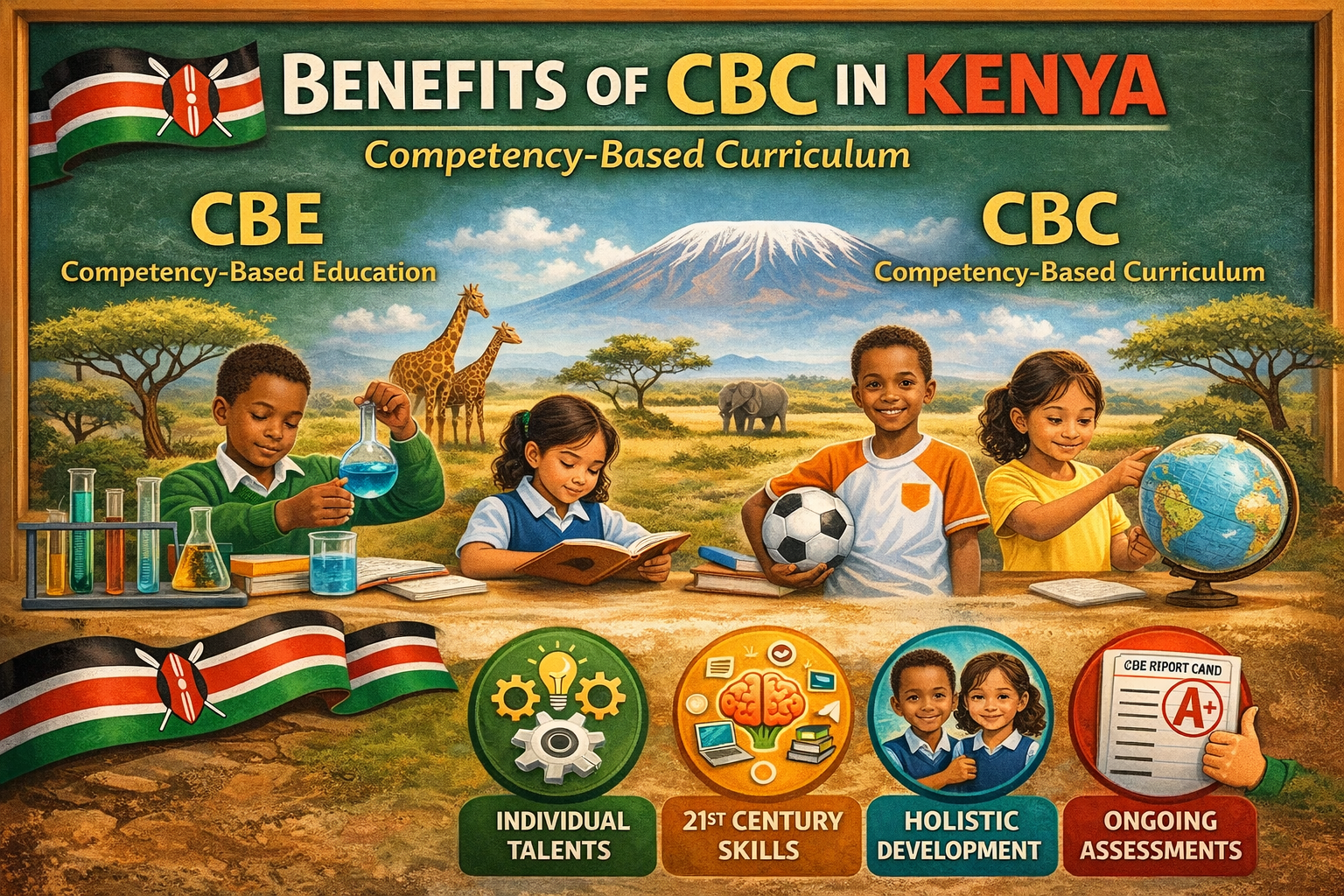
When Kenya introduced the Competency-Based Curriculum in 2017, many parents wondered whether this new system would truly benefit their children. After years of the familiar 8-4-4 structure, the shift to CBC raised questions: Would this actually improve learning? Would children gain better skills? Would job prospects improve?
The benefits of CBC in Kenya extend far beyond just changing the education structure. This curriculum transformation addresses fundamental weaknesses in how Kenyan children learned under 8-4-4, focusing on developing well-rounded individuals with practical skills rather than exam-passing machines. The advantages of CBC become clearer as we examine how it transforms CBC skills development, improves CBC learner outcomes, and delivers genuine CBC education benefits to students, families, and the nation.
This article explores the concrete ways CBC benefits Kenyan learners, from early childhood through senior secondary, and how these benefits extend to families, educators, and Kenya’s economic development. Whether you’re a parent evaluating your child’s education, a teacher implementing CBC, or simply interested in Kenya’s education transformation, understanding these benefits helps appreciate why this change matters.
Core Benefits of CBC Education
Holistic Learner Development
One of the most significant CBC education benefits is the shift from narrow academic focus to comprehensive development of the whole child.
Beyond Academic Knowledge Under 8-4-4, success was measured almost entirely by exam scores in academic subjects. A child could excel at mathematics but receive no recognition for leadership abilities, artistic talents, or practical skills. CBC changes this fundamentally.
CBC assesses and nurtures seven core competencies: communication and collaboration, critical thinking and problem-solving, creativity and imagination, citizenship, digital literacy, learning to learn, and self-efficacy. A child who struggles with written exams might demonstrate exceptional problem-solving abilities through practical projects, leadership through group work, or creativity through arts and innovation activities.
Character and Values Development CBC deliberately integrates seven core values—love, responsibility, respect, unity, peace, patriotism, and integrity—throughout learning. These aren’t separate “character lessons” but woven into daily school activities and subject content.
When Grade 4 learners study environmental activities, they don’t just memorize facts about pollution. They discuss responsibility for protecting nature, respect for community resources, and unity in solving environmental challenges. These values shape behavior, attitudes, and citizenship in ways that pure academic instruction cannot.
Physical and Social-Emotional Growth CBC includes structured time for physical activities, creative arts, and social interaction. Pre-primary learners spend significant time in play-based activities that develop motor skills, emotional regulation, and social abilities. Older learners participate in sports, music, drama, and community service—all recognized as valuable learning, not just “extras.”
Reduced Exam Pressure and Stress
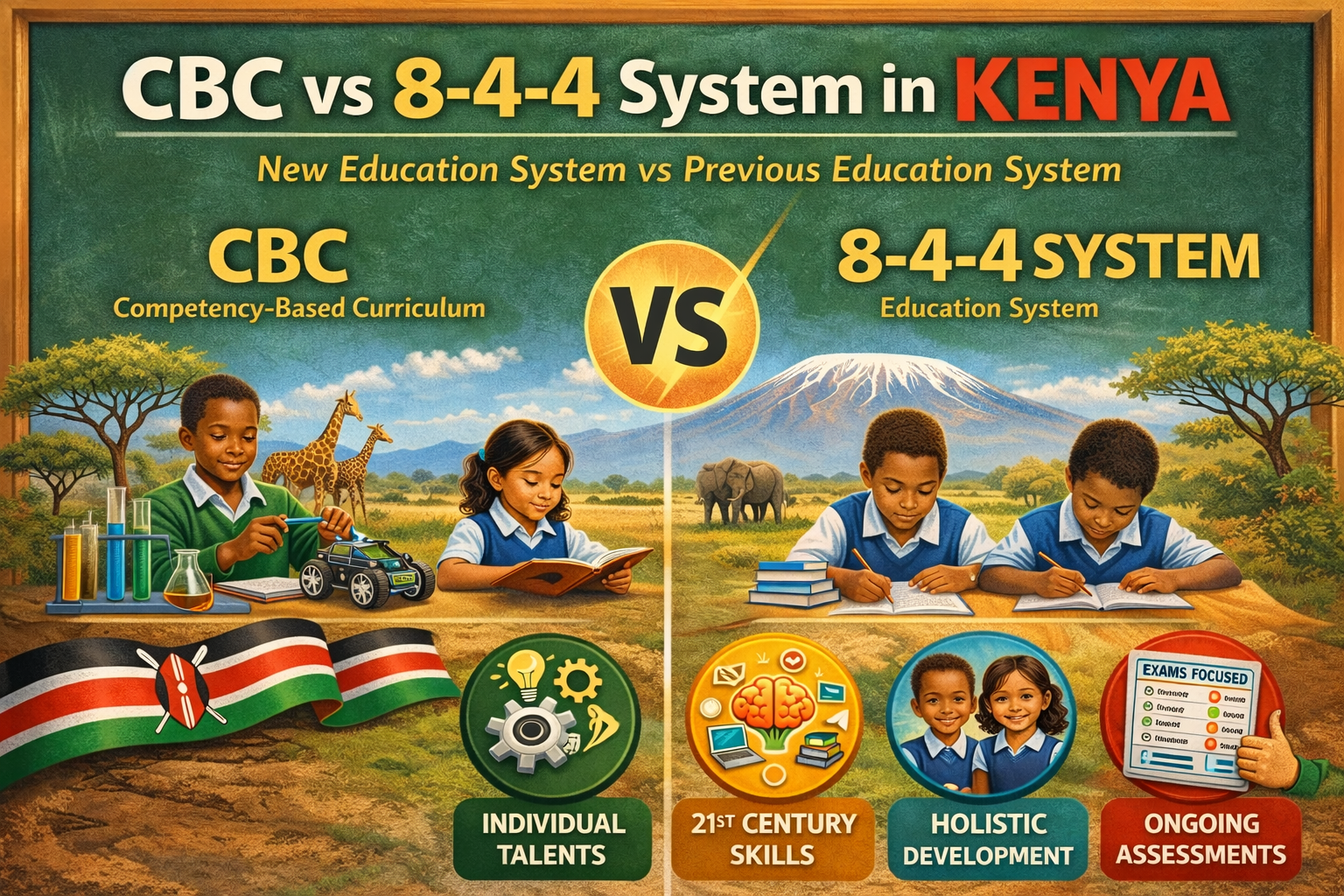
Continuous Assessment Instead of High-Stakes Exams One of the most appreciated advantages of CBC among parents and educators is the reduction in exam-related stress and pressure that characterized 8-4-4.
Under 8-4-4, a child’s entire primary school career culminated in one KCPE exam. That single test determined secondary school placement, creating enormous pressure on 13-year-olds. Many children experienced anxiety, sleep problems, and stress-related health issues during exam periods.
CBC uses continuous assessment throughout each term. Learners are evaluated through daily classwork, projects, practical activities, group work, and yes, some tests—but no single assessment determines their future. A child who performs poorly on one test has multiple other opportunities to demonstrate competency.
Learning from Mistakes In 8-4-4, mistakes on exams meant lost marks and lower rankings. In CBC, mistakes become learning opportunities. When formative assessment shows a child hasn’t mastered a competency, teachers provide additional support and practice before summative assessment. The focus shifts from “getting it right the first time” to “developing mastery over time.”
Mental Health Benefits Parents and teachers report that learners in CBC appear less anxious about school than previous generations. Children enjoy learning more when it’s not constantly overshadowed by exam fear. This healthier relationship with education can foster lifelong learning attitudes.
Talent Recognition and Development
Identifying Diverse Strengths Not every child is academically gifted in traditional ways, and CBC recognizes this reality better than 8-4-4 did.
A child who finds mathematics challenging might excel at creative writing, music, sports, or hands-on technical work. Under 8-4-4, such a child was often labeled a “weak student” because only academic performance mattered. CBC assesses multiple competencies across diverse learning areas, helping each child discover and develop their particular strengths.
Dedicated Time for Talent Nurturing CBC timetables include structured time for creative and movement activities. This isn’t “wasting time”—it’s deliberate talent development. A child who shows musical ability receives regular instruction and practice time. A child with sporting talent gets consistent training opportunities.
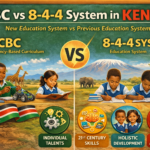
Schools increasingly offer clubs and activities aligned with CBC’s talent development goals: coding clubs, drama groups, environmental clubs, debating societies, sports teams, and more. These activities count as legitimate learning, with portfolios and assessments recognizing achievements.
Career Pathway Alignment From Grade 7, CBC helps learners identify career pathways aligned with their talents and interests. Instead of everyone following the same academic track until Form 3, learners choose electives in areas like agriculture, business studies, performing arts, computer science, or technical subjects.
By senior secondary, learners specialize in one of four pathways—STEM, Social Sciences, Arts and Sports Sciences, or Technical and Vocational. This early specialization allows deep development of talents and skills relevant to future careers.
CBC Skills Development Advantages
Critical Thinking and Problem-Solving
Real-World Application CBC emphasizes developing problem-solving abilities that transfer to real-life situations, not just classroom exercises.
When Grade 5 learners study water conservation in environmental activities, they don’t just read about it. They might investigate their school’s water use, identify wastage problems, propose solutions, and implement water-saving measures. This develops critical thinking: analyzing situations, identifying problems, evaluating options, making decisions, and assessing outcomes.
Project-Based Learning CBC encourages project-based assignments where learners tackle complex, open-ended challenges. A Grade 8 science project might require designing and building a simple machine to solve a local problem. Learners must research, plan, construct, test, modify, and present their solutions—developing problem-solving skills through actual problem-solving.
Inquiry and Questioning CBC classrooms encourage learners to ask questions, challenge assumptions, and think independently rather than just accepting information. Teachers pose problems and guide discovery rather than simply transmitting answers. This inquiry-based approach develops analytical thinking that serves learners throughout life.
Communication and Collaboration Skills
Teamwork Emphasis CBC deliberately incorporates group work throughout learning. Learners regularly work in teams on projects, experiments, discussions, and presentations.
This isn’t just “group work for its sake.” Through collaboration, learners develop essential skills: listening to others’ ideas, expressing their own views clearly, negotiating different opinions, sharing responsibilities, supporting teammates, and achieving common goals. These are exactly the teamwork skills employers consistently say they need but rarely find in graduates.
Multiple Communication Modes CBC develops communication through diverse methods: written work, oral presentations, visual displays, dramatic performances, digital media, and artistic expression. A learner who struggles with written essays might excel at explaining concepts orally or creating infographics. CBC recognizes and develops all communication modes.
Language Development CBC strengthens both English and Kiswahili language skills through integrated use across learning areas. Additionally, learners study indigenous languages, supporting multilingual abilities increasingly valuable in Kenya’s diverse society and regional integration efforts.
Digital Literacy and Technology Skills
Essential 21st Century Competency One of the clearest advantages of CBC is its recognition that digital literacy is no longer optional—it’s essential.
CBC includes digital literacy as a core competency developed across all learning areas. Learners don’t just study “computer science” as a separate subject. They use technology for research, create digital presentations, collaborate through online platforms, and develop safe, responsible technology use habits.
Preparing for Digital Economy Kenya’s economy increasingly relies on digital technologies: mobile money, e-commerce, digital services, tech startups, and more. CBC prepares learners to participate in this digital economy, whether as entrepreneurs, employees, or informed citizens.
In schools with adequate resources, learners use computers, tablets, educational software, and internet resources regularly. Even in schools with limited technology, teachers incorporate digital literacy concepts and prepare learners for eventual technology access.
Coding and Computational Thinking Some CBC learning areas introduce basic coding and computational thinking—the logical, systematic problem-solving approach that underlies computer programming. These skills apply far beyond technology, developing structured thinking useful in any field.
Practical and Technical Skills
Hands-On Learning CBC emphasizes practical activities across subjects. Science involves experiments, not just reading about experiments. Mathematics includes measuring actual objects, not just theoretical calculations. Social studies might include visiting local businesses or government offices to see concepts in action.
This hands-on approach ensures learners develop practical skills and understand real-world applications of knowledge. They don’t just know about farming—they plant seeds and observe growth. They don’t just read about business—they run class mini-enterprises.
Technical and Vocational Education Integration Unlike 8-4-4, which often viewed technical education as inferior to academic paths, CBC integrates TVET (Technical and Vocational Education and Training) as an equally valuable pathway.
From junior secondary, learners can explore technical subjects like agriculture, home science, business studies, and woodwork. By senior secondary, the entire Technical and Vocational pathway offers specialized training in trades and technical fields.
This integration means more Kenyan learners will graduate with practical, job-ready skills in areas where Kenya faces skill shortages: construction, agriculture, hospitality, mechanics, electrical work, and more.
Entrepreneurship Skills CBC deliberately develops entrepreneurial mindsets and skills. Learners participate in business-related projects, learn about identifying opportunities, managing resources, and creating value. These skills support self-employment—crucial in Kenya where wage employment cannot absorb all graduates.
CBC Learner Outcomes and Benefits
Improved Learning Outcomes
Deeper Understanding Over Memorization One of the key CBC learner outcomes is genuine understanding rather than surface-level memorization.
Under 8-4-4, many learners could recite formulas or historical dates but couldn’t explain concepts or apply knowledge to new situations. They “crammed” information for exams, then forgot it afterward.
CBC’s competency-based approach requires demonstrating understanding through application. A learner must show they can use mathematical concepts to solve problems, not just recite multiplication tables. This focus on application ensures deeper, longer-lasting learning.
Mastery-Based Progression Because CBC uses continuous assessment and allows for remedial support, learners can achieve mastery before moving forward. A child who struggles with a concept receives additional help until they develop competency, rather than being left behind while the class moves on.
This mastery-based approach means fewer learners progress through school with fundamental gaps in understanding. The foundation is solid before building higher-level skills.
Active Learning Engagement CBC’s learner-centered methods increase engagement. When children participate actively—doing experiments, solving problems, working in groups, creating projects—they learn more effectively than when passively listening to lectures.
Teachers report that CBC learners show more curiosity, ask more questions, and demonstrate greater enthusiasm for learning compared to the passive compliance often seen in traditional classrooms.
Better Career Preparation
Diverse Career Pathways CBC’s multiple pathways ensure learners develop skills aligned with various career directions, not just university-bound academic tracks.
A learner following the Technical and Vocational pathway graduates with practical skills directly applicable to employment in trades, manufacturing, construction, or entrepreneurship. They don’t need additional training to enter the workforce—they’re job-ready from secondary school.
STEM pathway learners develop strong science and technology foundations for engineering, medicine, technology, and related fields. Social Sciences and Arts pathways similarly prepare learners for specific career clusters.
Employability Skills Beyond subject knowledge, CBC develops “soft skills” employers consistently identify as crucial: communication, teamwork, problem-solving, adaptability, time management, and professionalism.
CBC learners participate in group projects, make presentations, meet deadlines, solve problems independently, and navigate challenges—exactly the experiences that build employability. Employers increasingly report that while technical skills can be taught, these fundamental competencies are harder to develop if not learned early.
Addressing Youth Unemployment Youth unemployment remains a critical challenge in Kenya. Many 8-4-4 graduates lacked practical skills matching job market needs, creating a paradox of educated unemployment—graduates without work while employers couldn’t find skilled workers.
CBC directly addresses this by aligning skills development with economic needs. Learners graduate with competencies Kenya’s economy actually requires, whether in technology, agriculture, services, manufacturing, or entrepreneurship.
Enhanced Self-Confidence and Efficacy
Multiple Ways to Succeed When success is defined narrowly as exam scores, children who don’t excel academically often develop poor self-esteem. They internalize the message that they’re “not good at school” or “not smart.”
CBC’s recognition of diverse competencies and talents means every child can find areas where they excel. A child who struggles with mathematics might discover they’re excellent at creative arts, sports, or practical problem-solving. Success in any competency area builds confidence.
Growth Mindset Development CBC’s continuous assessment and formative feedback approach fosters growth mindsets—the belief that abilities can be developed through effort and learning.
When a child receives feedback like “You’re approaching expectations in this competency—here’s what you need to practice,” rather than just “You scored 45%,” they understand that improvement is possible and effort matters. This mindset—that intelligence and abilities aren’t fixed but can grow—predicts greater achievement and resilience.
Self-Efficacy Building Self-efficacy—one of CBC’s seven core competencies—is the belief in one’s ability to succeed in specific situations. CBC builds this through providing appropriate challenges, supporting mastery experiences, offering positive feedback, and allowing learners to see peers succeed.
Children with strong self-efficacy are more likely to take on challenges, persist when things are difficult, recover from setbacks, and ultimately achieve their goals—benefits that extend far beyond school into all of life.
Benefits for Parents and Families
Better Understanding of Child’s Progress
Detailed Assessment Information CBC reports provide much more specific information than 8-4-4 percentage scores ever did. Instead of seeing “65% in Maths,” parents receive detailed breakdowns: “Exceeding Expectations in addition and subtraction, Meeting Expectations in multiplication, Approaching Expectations in division word problems.”
This specificity helps parents understand exactly where their child excels and where they need support. They can provide targeted help rather than vague “study harder” advice.
Regular Communication CBC encourages ongoing parent-teacher communication through regular meetings, progress reports, and involvement in learner portfolios. Parents become partners in education rather than distant observers who only see report cards three times yearly.
Opportunity for Diverse Success
Valuing All Children’s Strengths Parents whose children didn’t fit the narrow 8-4-4 academic mold often worried about their futures. CBC offers hope that every child can succeed by recognizing diverse talents.
A parent whose child loves building things and working with hands can now see a clear, valued pathway through technical education rather than forcing an ill-fitting academic route. A child passionate about music or sports has recognized opportunities to develop those talents.
Reduced Financial Pressure
Less Exam Coaching Expense Under 8-4-4, many parents felt compelled to pay for extra tuition, coaching classes, and exam preparation to help children compete. The high-stakes exam system created a lucrative coaching industry.
While some parents still seek additional support under CBC, the reduced exam pressure and continuous assessment approach lessens the perceived need for expensive coaching. Learning happens continuously in school rather than cramming for one decisive exam.
Multiple Pathways to Success Not every successful career requires a university degree. CBC’s technical and vocational pathways offer quality education leading to good careers without the expense of university. For families with limited resources, having children enter skilled employment after Grade 12 with recognized qualifications can be life-changing.
Benefits for Teachers and Schools
Professional Growth and Satisfaction
Creative Teaching Methods Many teachers find CBC more professionally fulfilling than 8-4-4. Instead of teaching to tests, they can use creative, engaging methods that make learning enjoyable.
Teachers design hands-on activities, organize field trips, facilitate group projects, and see learners genuinely excited about learning. This creativity and learner engagement often reignites teachers’ own passion for education.
Meaningful Assessment While CBC assessment is more time-intensive, many teachers appreciate its meaningfulness. Instead of just marking tests, they observe actual competency development, provide helpful feedback, and see tangible learner growth. This makes the professional work more satisfying.
Better Learner Behavior and Engagement
Reduced Discipline Issues Teachers report that CBC’s active learning approaches reduce classroom management challenges. When learners are engaged in interesting activities rather than sitting passively, behavioral problems decrease.
Group work, practical activities, and project-based learning channel energy productively. Learners who might disrupt traditional lectures thrive when given hands-on tasks.
Stronger Teacher-Learner Relationships CBC’s learner-centered approach requires teachers to know students individually—their strengths, challenges, interests, and learning styles. This individual attention builds stronger relationships and creates positive classroom environments.
National and Economic Benefits
Skilled Workforce Development
Addressing Skills Gaps Kenya faces serious skills gaps in many sectors. Employers struggle to find qualified electricians, plumbers, mechanics, technicians, agricultural specialists, and other skilled workers. Many available jobs go unfilled due to lack of qualified candidates.
CBC’s integration of technical and vocational pathways directly addresses these gaps. More learners will graduate with practical skills in high-demand areas, reducing unemployment while meeting economic needs.
Innovation and Entrepreneurship By developing creativity, critical thinking, and problem-solving skills, CBC nurtures the innovators and entrepreneurs Kenya needs. Economic development increasingly depends on innovation—finding new solutions to challenges, creating new products and services, and starting successful businesses.
CBC learners are better prepared to identify opportunities, develop innovative solutions, and launch ventures than learners trained primarily to follow instructions and pass exams.
Alignment with Vision 2030
Supporting Development Goals Kenya’s Vision 2030 aims to transform the country into a middle-income nation through economic, social, and political development. Achieving these goals requires a skilled, innovative, and competent population.
CBC directly supports Vision 2030 by producing graduates with competencies the economy needs: technological skills for industrial development, agricultural knowledge for food security, entrepreneurial abilities for economic growth, and citizenship values for political stability.
Regional Competitiveness
International Standards CBC aligns Kenya’s education with international best practices in competency-based learning. This alignment makes Kenyan qualifications more easily recognized regionally and globally, supporting workforce mobility and international opportunities for Kenyan graduates.
East African Community Integration As East African countries work toward greater regional integration, having education systems that develop comparable competencies facilitates movement and cooperation. CBC positions Kenya as a regional leader in education transformation.
Frequently Asked Questions (FAQs)
What are the main benefits of CBC for learners in Kenya?
The main benefits of CBC for learners include holistic development of academic, practical, social, and emotional skills rather than just exam performance; reduced stress through continuous assessment instead of high-stakes exams; recognition and development of diverse talents and abilities; practical skill development relevant to real careers; better preparation for 21st-century job markets through digital literacy and problem-solving skills; and multiple valued pathways to success including technical, vocational, artistic, and academic routes.
How does CBC skills development differ from 8-4-4?
CBC skills development differs from 8-4-4 by focusing on competencies learners can actually apply rather than just knowledge to memorize. CBC deliberately develops critical thinking, creativity, communication, collaboration, digital literacy, and practical skills through hands-on activities, projects, and real-world applications. 8-4-4 primarily emphasized content mastery and exam performance, often producing learners who could recite information but struggled to apply it practically or solve real problems.
Do CBC learners perform better than 8-4-4 learners?
It’s too early to fully compare since the first CBC cohort won’t complete secondary school until 2029. However, early indicators suggest CBC learners develop broader competencies even if direct academic comparison is difficult due to different assessment methods. CBC learners demonstrate stronger practical skills, creativity, critical thinking, and engagement with learning. The question isn’t just “do they score higher?” but “are they better prepared for life and careers?”—and evidence suggests yes.
What advantages does CBC offer for career preparation?
CBC offers significant advantages for career preparation including early identification of career interests through electives from Grade 7; specialized pathways (STEM, Social Sciences, Arts and Sports, Technical and Vocational) aligned with career clusters; practical skill development in chosen fields; integration of employability skills like teamwork, communication, and problem-solving; entrepreneurship education for self-employment; and direct preparation for workforce entry through technical and vocational tracks without requiring additional training.
How does CBC benefit parents and families?
CBC benefits parents and families through reduced exam-related stress for children and parents; detailed information about specific competencies rather than vague percentage scores; recognition that all children can succeed in valued ways through diverse pathways; opportunities for children to develop natural talents whether academic, artistic, technical, or athletic; potentially reduced coaching expenses due to less exam pressure; and clearer career pathways including affordable technical options that don’t require expensive university education.
Are there benefits of CBC for students who struggle academically?
Yes, CBC particularly benefits learners who struggled under 8-4-4’s narrow academic focus. CBC recognizes multiple forms of intelligence and ability, providing opportunities to excel in practical skills, arts, sports, or technical areas even if academic subjects are challenging. Continuous assessment and remedial support help struggling learners master competencies rather than falling permanently behind. Multiple career pathways mean academic difficulty doesn’t block all success routes. The competency-based approach shows exactly what support is needed rather than just giving low marks.
Conclusion
The benefits of CBC in Kenya extend across multiple dimensions—individual learner development, family wellbeing, educational quality, and national economic progress. While implementation challenges exist and the system continues evolving, the fundamental advantages of CBC address genuine weaknesses in Kenya’s previous education approach.
Through comprehensive CBC skills development—from critical thinking and creativity to practical technical abilities and digital literacy—the curriculum prepares learners for real-world success in ways 8-4-4 could not. The improved CBC learner outcomes reflect not just better test scores but deeper understanding, stronger competencies, and greater readiness for diverse career paths.
The CBC education benefits recognize that children develop differently, learn in various ways, and possess diverse talents all worthy of recognition and development. By reducing exam pressure, valuing multiple pathways to success, integrating practical skills, and aligning education with economic needs, CBC creates a more humane, effective, and relevant education system.
For parents, the benefits include seeing their children thrive in recognized ways rather than struggling to fit narrow academic molds. For teachers, CBC offers professional satisfaction through creative, meaningful teaching. For Kenya as a nation, CBC promises a generation better equipped with the competencies, skills, and values needed to achieve development goals and compete globally.
As the first CBC cohorts progress through the system and eventually enter the workforce, these benefits will become increasingly evident. The transformation from an exam-focused system to one that develops well-rounded, competent, confident citizens represents one of the most important investments in Kenya’s future.