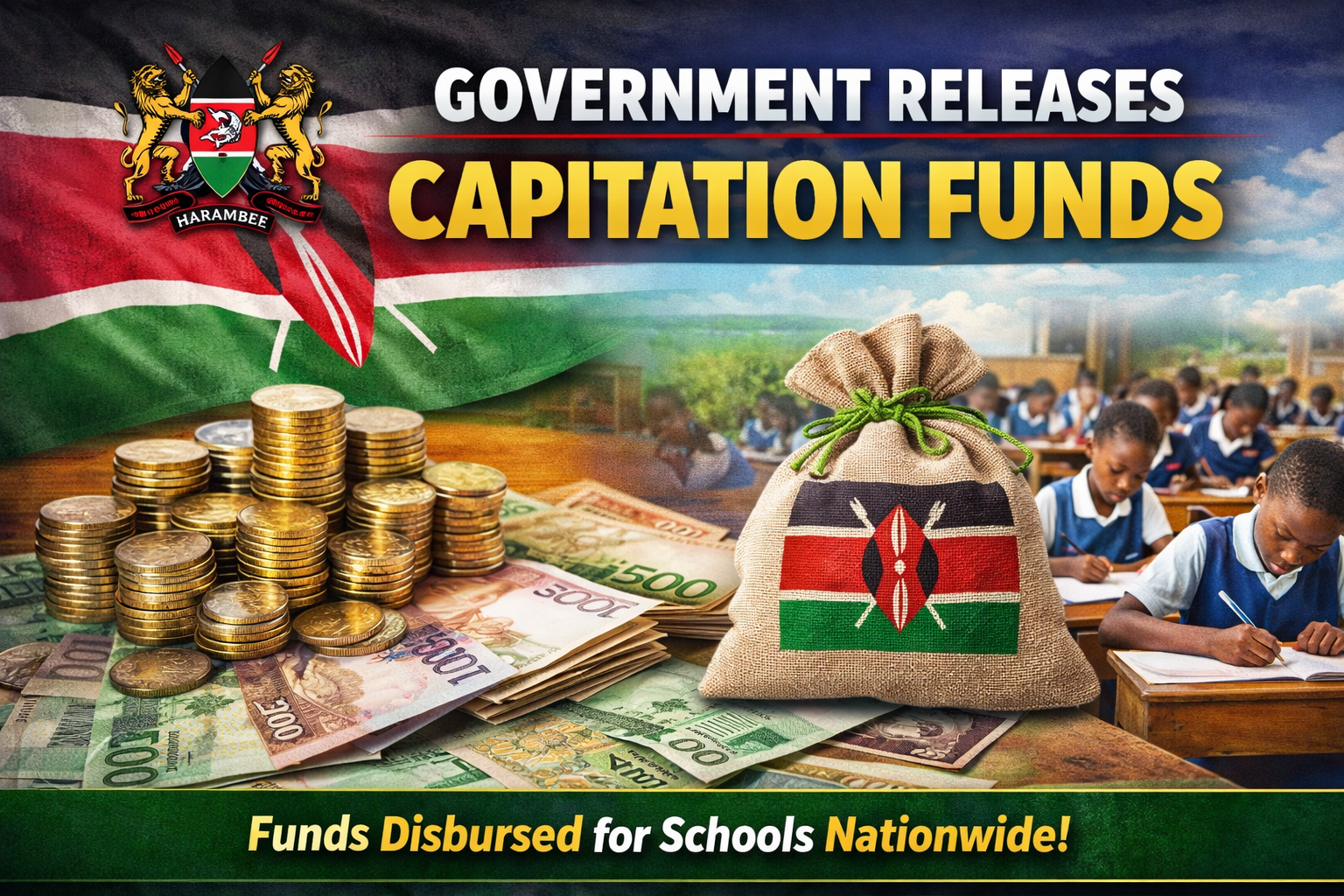
Government Releases Capitation Funds to Public Schools for First Term 2026
Get High Paying Surveys
Earn money online by completing simple surveys. No experience needed.
Start Earning →The National Treasury has confirmed that the government releases capitation funds totaling Ksh 16.8 billion to all public primary and secondary schools across Kenya. The disbursement, announced on January 8, 2026, covers the first term of the 2026 academic year and will support learning activities for over 10 million learners.
This school funding disbursement comes at a critical time as schools prepare to reopen for Term One on January 13, 2026. The release ensures that schools can purchase learning materials, pay non-teaching staff, maintain infrastructure, and cover other operational costs without delays that have previously disrupted learning.

Education stakeholders, including parents and teachers’ unions, have welcomed the timely release while urging the government to maintain consistent funding throughout the year to avoid the financial crises that have affected schools in past years.
What Has Been Announced
The Ministry of Education, through the National Treasury, released Ksh 16.8 billion in capitation funds to public schools on January 8, 2026. This represents the first tranche of the annual education budget release allocated for free primary and secondary education in Kenya.
The school funding disbursement breaks down as follows:
- Primary schools: Ksh 8.4 billion covering approximately 8.2 million learners
- Secondary schools: Ksh 8.4 billion supporting approximately 2.8 million students
- Special needs institutions: Ksh 450 million for learners with disabilities in integrated and special schools
The capitation amount per learner remains unchanged from the 2025 rates:
Get High Paying Surveys
Earn money online by completing simple surveys. No experience needed.
Start Earning →
- Primary school learners: Ksh 1,420 per learner annually
- Day secondary students: Ksh 22,244 per learner annually
- Boarding secondary students: Additional allocation on top of the day school rate
- Special needs learners: Enhanced rate based on type of disability
The funds have been disbursed directly to individual school accounts through the National Education Management Information System (NEMIS). Schools can verify receipt by checking their bank statements or logging into their NEMIS accounts.
This public schools funding 2026 allocation represents the first of three expected disbursements for the year, with subsequent releases planned for Term Two (May 2026) and Term Three (September 2026).
The Ministry of Education confirmed that the capitation funds must be used strictly for approved expenditure categories including instructional materials, infrastructure maintenance, utilities, and school operations. Misuse of funds will result in legal action against school administrators.
Who Is Affected and How
The government releases capitation funds benefiting multiple stakeholders across Kenya’s public education system.
Public primary schools receive funding based on their registered learner enrollment in NEMIS. Head teachers can now purchase textbooks, exercise books, chalk, and other learning materials for Term One. Schools with large enrollments in counties like Nairobi, Kiambu, and Nakuru will receive proportionally higher amounts.
Public secondary schools benefit from higher per-learner allocations that cover laboratory equipment, library books, sports facilities, examination fees, and co-curricular activities. Day schools receive lower amounts compared to boarding institutions, which have additional costs for food, accommodation, and utilities.
Get High Paying Surveys
Earn money online by completing simple surveys. No experience needed.
Start Earning →
Special needs schools and units receive enhanced funding to cater for specialized equipment, therapy services, assistive devices, and trained support staff required for learners with various disabilities.
Parents and guardians are the ultimate beneficiaries as the capitation amount per learner ensures they don’t bear the full cost of educating their children. The government’s commitment to free basic education reduces household financial burdens, particularly for low-income families.
Teachers and school staff benefit indirectly as well-funded schools can create better learning environments, purchase teaching aids, and maintain functional facilities that make their work easier and more effective.
Get High Paying Surveys
Earn money online by completing simple surveys. No experience needed.
Start Earning →County education officials are responsible for monitoring how schools utilize the school funding disbursement and ensuring compliance with financial management guidelines issued by the Ministry of Education.
Schools in marginalized regions such as Turkana, Wajir, and Samburu receive the same capitation amount per learner as schools in urban areas, promoting equity in education access despite geographical disparities.

Official Statements and Clarifications
The Cabinet Secretary for Education emphasized that the government releases capitation funds as part of the administration’s commitment to ensuring uninterrupted learning in all public schools. Officials noted that timely disbursement for Term One demonstrates improved budget planning and resource allocation.
National Treasury representatives confirmed that the education budget release aligns with the government’s fiscal framework for 2026 and represents approximately 26% of the national budget allocated to the education sector. This places education among the top-funded areas of government expenditure.
The Ministry of Education clarified that the capitation amount per learner has not increased from previous rates due to budget constraints, but assured stakeholders that the government is exploring ways to enhance funding in future financial years. Inflation and rising operational costs mean schools must manage resources more efficiently.
Officials warned school principals against inflating enrollment numbers to receive higher allocations. NEMIS data is regularly audited, and schools found manipulating figures will face sanctions including refund of excess funds and possible prosecution of responsible administrators.
The Teachers Service Commission (TSC) confirmed that capitation funds are separate from teachers’ salaries and should not be used for any staffing-related expenses. Teachers are paid directly by TSC through the Integrated Payroll and Personnel Database (IPPD).
Regional education directors have been instructed to conduct spot checks on schools to ensure the public schools funding 2026 allocation is used appropriately and that procurement follows government regulations to prevent corruption and wastage.
What Parents and Schools Should Do Next
Schools must utilize the funds responsibly and transparently to maximize benefits for learners and comply with government regulations.
Schools should:
- Confirm receipt of the school funding disbursement by checking bank statements immediately
- Convene Board of Management meetings to plan expenditure based on school needs
- Prioritize purchasing learning materials, especially textbooks and stationery for Term One
- Maintain proper financial records and receipts for all purchases made using capitation funds
- Display how funds are spent on school noticeboards to promote transparency and accountability
- Avoid using capitation money for unauthorized expenses such as staff allowances or personal benefits
- Report any delays or discrepancies in funding to County Education Directors immediately
Parents should:
- Verify with schools that capitation funds have been received before paying for items that should be covered by government funding
- Participate in school meetings where budget utilization is discussed
- Report to relevant authorities any misuse of funds by school administrators
- Understand that the capitation amount per learner covers specific items and some costs may still require parental contribution
- Cooperate with schools in maintaining facilities and supporting learning beyond financial contributions
School Boards of Management should:
- Approve school budgets that align with government guidelines on capitation spending
- Monitor procurement processes to prevent corruption and ensure value for money
- Review financial reports regularly and demand accountability from head teachers
- Engage parent associations in discussions about school funding and resource needs
The Ministry of Education has provided a toll-free helpline (1234) for reporting misuse of capitation funds or delays in disbursement. Schools and parents can also report issues through county education offices.
Common Questions (FAQs)
How much capitation has the government released for 2026?
The government releases capitation funds totaling Ksh 16.8 billion for the first term of 2026, covering all public primary and secondary schools in Kenya.
What is the capitation amount per learner in 2026?
Primary school learners receive Ksh 1,420 annually, while day secondary students get Ksh 22,244 annually. Special needs learners receive enhanced rates depending on their specific requirements.
When will schools receive the public schools funding 2026 disbursement?
Schools began receiving funds on January 8, 2026. The money is sent directly to school bank accounts registered in NEMIS. Schools should check their accounts to confirm receipt.
Can schools use capitation funds to pay teachers?
No. Capitation funds cannot be used for teacher salaries or allowances. Teachers are paid directly by TSC. Capitation covers learning materials, infrastructure, and operational costs only.
What happens if a school does not receive the school funding disbursement?
Schools that don’t receive funds should immediately contact their County Education Director or report through the Ministry’s helpline. Delays may be due to NEMIS registration issues or banking problems.
Are private schools entitled to government capitation funds?
No. Capitation funds are only for registered public primary and secondary schools. Private institutions operate independently and charge fees to cover their operational costs.
What This Means for Kenya’s Education System
The timely release of capitation funds for Term One 2026 represents a positive step in education financing and demonstrates improved coordination between the National Treasury and the Ministry of Education. Consistent school funding disbursement is critical for maintaining quality education and preventing the learning disruptions that occur when schools lack basic resources.
The capitation amount per learner, while unchanged, continues to provide essential financial support that reduces the burden on parents and promotes access to education for children from all economic backgrounds. This aligns with Kenya’s constitutional commitment to free and compulsory basic education.
However, education experts note that the current capitation rates have not kept pace with inflation and rising costs of learning materials. Schools struggle to stretch limited allocations across growing needs, particularly as the Competency-Based Curriculum demands more diverse learning resources beyond traditional textbooks.
The public schools funding 2026 allocation also highlights the government’s prioritization of education despite competing demands on the national budget. With education consuming over a quarter of government spending, stakeholders must ensure funds are used efficiently and transparently to deliver value for taxpayers.
Challenges remain in monitoring how schools utilize funds, preventing corruption, and ensuring equitable distribution of resources beyond just financial allocations. Schools in remote areas often face higher costs for procuring materials and maintaining infrastructure, yet receive the same per-learner amounts as urban schools.
The education budget release for subsequent terms will be closely watched by stakeholders to assess whether the government maintains consistent funding throughout 2026 or reverts to the unpredictable patterns that have characterized previous years.
Conclusion
The confirmation that the government releases capitation funds totaling Ksh 16.8 billion for Term One is welcome news for Kenya’s public schools. With clear allocations and timely disbursement, schools can begin the year prepared to deliver quality education to over 10 million learners.
School administrators must manage the school funding disbursement responsibly, prioritizing learning materials and essential infrastructure. Parents should remain engaged in monitoring how capitation funds are utilized and hold schools accountable for transparent financial management.
For updates on subsequent disbursements and education funding policies, stakeholders should regularly check the Ministry of Education website at www.education.go.ke or follow official communication through county education offices. Proper utilization of these funds will determine the quality of education Kenyan children receive in 2026.
Get High Paying Surveys
Earn money online by completing simple surveys. No experience needed.
Start Earning →