Selling on Jumia Kenya 2026: How to Open a Seller Account and Make Real Money
Get High Paying Surveys
Earn money online by completing simple surveys. No experience needed.
Start Earning →Selling on Jumia Kenya involves registering a free seller account on Jumia Vendor Hub, listing your products, and earning money whenever a customer places an order. Jumia handles delivery logistics, and you receive payment via M-Pesa or bank transfer. It is one of the most accessible e-commerce platforms in Kenya for both beginners and established businesses.
Introduction: Why Jumia Is Kenya’s Biggest Online Sales Opportunity
Every day, millions of Kenyans open the Jumia app to shop — from electronics and fashion to groceries and household items. While most people are on the buying side, a growing number of Kenyans are on the other side of that transaction, running profitable online businesses through Jumia.

Whether you are a trader in Gikomba, a manufacturer in the industrial area, or someone selling handmade goods from home, selling on Jumia Kenya gives you access to a customer base that would take years to build on your own.
In 2026, Jumia remains the largest ecommerce platform in Kenya and across Africa. This guide walks you through exactly how to open your Jumia seller account, list products, handle logistics, get paid via M-Pesa, and avoid the most common mistakes new sellers make.
What Is Jumia Kenya and How Does It Work for Sellers?
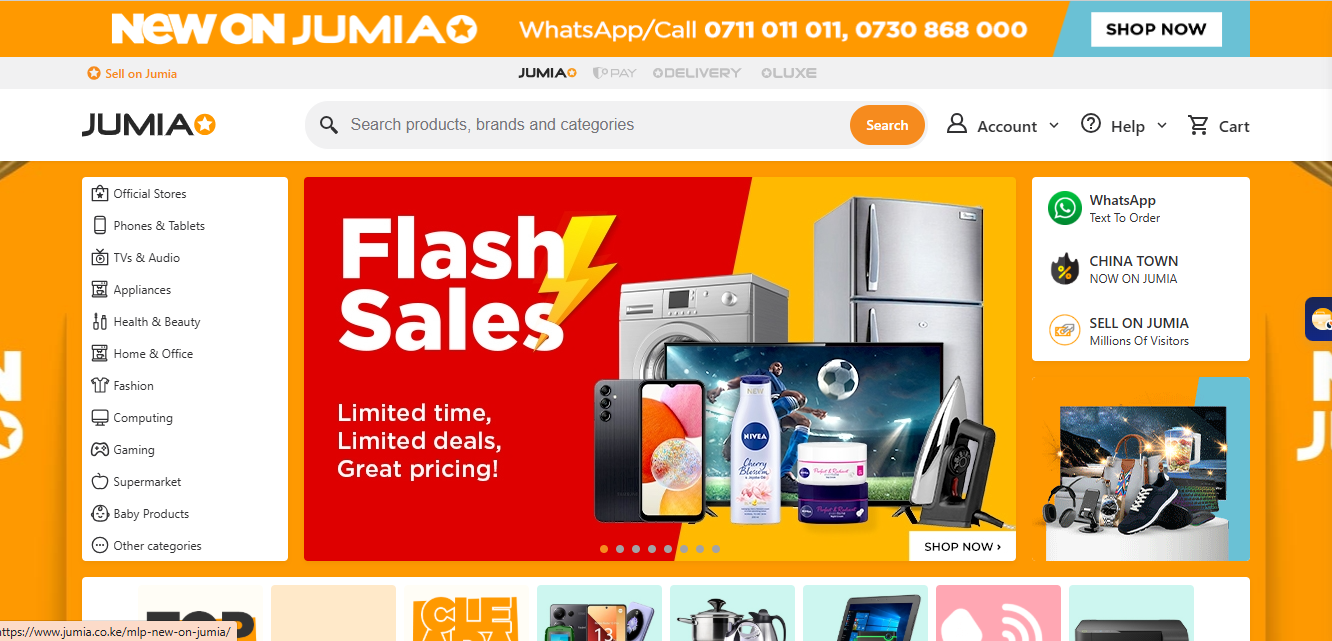
Jumia Kenya is an online marketplace where independent sellers list products and sell to customers across Kenya. Think of it like a digital version of a market stall — but with millions of potential customers browsing 24 hours a day.
When a customer places an order on your listing, Jumia notifies you to prepare the item. You either drop it off at a Jumia pick-up station or arrange for Jumia Express collection. Jumia handles the delivery to the customer, and you receive payment after the order is successfully delivered and confirmed.
Get High Paying Surveys
Earn money online by completing simple surveys. No experience needed.
Start Earning →
Jumia charges a commission on each sale depending on the product category. You keep the rest, paid directly to your M-Pesa or bank account.
Is Selling on Jumia Kenya Legit and Worth It?
Yes, selling on Jumia Kenya is completely legitimate and has proven profitable for thousands of Kenyan entrepreneurs. Jumia has operated in Kenya since 2013 and is publicly listed on the New York Stock Exchange, making it one of the most regulated and transparent ecommerce platforms in Africa.
That said, success on Jumia is not guaranteed. Competition is stiff in popular categories, and pricing strategy matters enormously. Sellers who research their market, price competitively, and maintain high ratings consistently earn well. Those who list products randomly without a strategy tend to get lost in the marketplace.
In Kenya, many people use Jumia as their primary sales channel and earn between Ksh 20,000 and Ksh 300,000 per month depending on product type, pricing, and volume.
Requirements to Start Selling on Jumia Kenya
Before registering, make sure you have the following ready:
- A valid Kenyan national ID or passport
- A working phone number and email address
- An M-Pesa registered line or Kenyan bank account for receiving payments
- KRA PIN certificate (required for tax compliance)
- Your business name or personal name for the seller account
- Product photos (at least one clear image per product on a white or plain background)
- Product descriptions, prices, and stock quantities
You do not need a physical store, a business registration certificate to start, or any upfront fees. Registration is completely free.
Get High Paying Surveys
Earn money online by completing simple surveys. No experience needed.
Start Earning →
How to Open a Jumia Seller Account in Kenya: Step-by-Step
Step 1 — Visit the Jumia Vendor Hub
Go to https://vendorhub.jumia.co.ke on your phone or computer. This is the official portal for all Kenyan Jumia sellers.
Step 2 — Click “Register as a Seller”
Fill in your basic information — name, email address, phone number, and a secure password. Use an email address you check regularly, as Jumia sends order notifications, payment confirmations, and account updates to this email.
Step 3 — Enter Your Business Information
Provide your business or personal name, your physical address (for seller verification), and your KRA PIN. If you do not have a KRA PIN, register for one free at https://itax.kra.go.ke — it takes under 30 minutes online.
Get High Paying Surveys
Earn money online by completing simple surveys. No experience needed.
Start Earning →Step 4 — Add Your Payment Details
Enter your M-Pesa number or bank account details. This is where Jumia deposits your earnings after every successful order delivery.
Step 5 — Upload Your ID
Upload a clear photo of your national ID (front and back) for identity verification. This step is mandatory before your account is approved.

Step 6 — Wait for Account Approval
Jumia typically approves new seller accounts within 24–72 hours. You will receive a confirmation email once your account is live.
Step 7 — List Your First Products
Log into your Vendor Hub dashboard, navigate to “My Products,” and start adding your listings. Each listing requires a product name, category, description, price, stock quantity, and at least one high-quality photo.
How to List Products on Jumia Kenya the Right Way
Product listings are your storefront. A poorly written listing with a blurry photo will not sell — even if your product is excellent. Here is how to create listings that convert:
Product Title — Be specific and keyword-rich. Instead of “Black Bag,” write “Women’s Black Leather Handbag — Large Shoulder Tote with Zipper.” Customers search using specific terms, and your title must match those searches.
Product Photos — Use a plain white or light background. Show the product from multiple angles. If you are selling clothing, show it worn on a model or mannequin. Avoid watermarks, blurry images, or photos with cluttered backgrounds.
Product Description — List all key features in bullet points. Include dimensions, materials, colours available, and any compatibility details (especially for electronics and accessories). Answer the questions a customer would ask before buying.
Pricing — Research what competitors are charging for the same or similar products on Jumia. Price competitively without undervaluing your product. Factor in Jumia’s commission so you still make a profit after the fee.
Stock Quantity — Always keep your stock count accurate. Running out of stock mid-order results in cancellations, which damage your seller rating.
Jumia Commission Structure in Kenya
Jumia charges a commission on each completed sale. The commission rate varies by product category. Here are approximate rates as of 2026:
- Fashion and clothing: 10%–15%
- Electronics and phones: 5%–8%
- Home and living: 8%–12%
- Health and beauty: 10%–13%
- Computing and accessories: 6%–9%
- Books and stationery: 8%–10%
These percentages are deducted automatically from your sale price before Jumia transfers your earnings. Always calculate your profit margins with the commission factored in before setting your price.
Delivery and Logistics: How Jumia Handles Orders
One of the biggest advantages of selling on Jumia Kenya is that you do not have to manage delivery yourself. Jumia operates two main fulfilment models:
Seller Fulfilment — You package the item and drop it off at the nearest Jumia pick-up station once an order is placed. Jumia then delivers it to the customer. This is the standard option for most Kenyan sellers.
Jumia Express (JX) — You send your stock in bulk to a Jumia warehouse, and Jumia handles storage, packaging, and delivery. Products listed under Jumia Express get a priority badge, higher visibility, and faster delivery — which increases conversion rates significantly. This is ideal for high-volume sellers.
Jumia has pick-up stations in Nairobi, Mombasa, Kisumu, Nakuru, Eldoret, Thika, and other major towns across Kenya, making logistics manageable for sellers outside the capital.
Payment Methods: How You Get Paid as a Jumia Seller
Jumia Kenya pays sellers after successful order delivery and completion. Payment cycles run weekly, and funds are transferred directly to your registered M-Pesa number or bank account.
M-Pesa — The most popular withdrawal option for Kenyan sellers. Fast, reliable, and available everywhere.
Bank Transfer — Supported for all major Kenyan banks including Equity, KCB, Co-operative Bank, NCBA, and Absa. Bank transfers are processed within 3–5 working days.
The minimum withdrawal threshold is Ksh 500. Most active sellers receive weekly payouts automatically once their balance exceeds the threshold.
What to Sell on Jumia Kenya: Best Product Categories in 2026
Not all products perform equally on Jumia. These categories consistently generate the highest sales volume in Kenya:
Electronics and Accessories — Phone cases, chargers, earphones, and power banks are among the fastest-moving items. High demand, easy to source, and relatively low return rates.
Fashion and Clothing — Men’s and women’s clothing, shoes, and bags. High competition but enormous market size. Unique or locally designed items stand out.
Health and Beauty — Skincare products, hair care, and personal care items. Growing category with loyal repeat buyers.
Home and Kitchen — Cookware, storage solutions, bedding, and home décor. High average order value and consistent demand year-round.
Baby Products — Diapers, feeding accessories, baby clothing, and toys. Low return rates and strong buyer loyalty.
Agricultural Inputs — Seeds, fertilizers, and farm tools sell extremely well outside Nairobi. Underserved category with less competition.
How Much Can You Earn Selling on Jumia Kenya?
Realistic monthly earnings depend on your product category, pricing, listing quality, and order volume:
Beginner Seller (1–10 products listed, low traffic): Ksh 5,000–20,000/month — building reviews and visibility
Growing Seller (10–50 products, optimised listings): Ksh 20,000–80,000/month — consistent orders across multiple products
Established Seller (50+ products, Jumia Express enrolled): Ksh 80,000–300,000/month — high volume, repeat customers, strong seller rating
Top Seller (specialised niche, bulk sourcing, JX fulfilment): Ksh 300,000–1,000,000+/month — treated as a full business operation
The difference between a beginner and a top seller is almost always product research, listing quality, and customer service — not luck.
E-commerce Platforms in Kenya: How Jumia Compares
Jumia is not the only e-commerce platform in Kenya, but it is the largest by traffic. Here is how it compares to alternatives:
Jumia Kenya — Largest customer base, established logistics network, high trust. Best for physical products with broad market appeal. Commission-based model.
Kilimall — Kenya-based platform with lower fees than Jumia. Smaller audience, but growing. Good for electronics and general merchandise.
Jiji Kenya — Classified ads model. No transaction fees, but you handle delivery yourself. Better for high-ticket items like furniture and cars.
Masoko (by Safaricom) — M-Pesa integration makes checkout seamless. Growing platform backed by Safaricom’s customer base.
Your Own Website (WooCommerce or Shopify) — Full control, no commissions, but you are responsible for driving all your own traffic. Best used alongside Jumia, not instead of it.
Most successful Kenyan online sellers list on Jumia first to validate their products, then expand to their own website once they have established reviews and a customer base.
Common Mistakes to Avoid When Selling on Jumia Kenya
Setting prices without factoring in commission. Many new sellers price their products, forget about Jumia’s commission, and end up making a loss or breaking even. Always calculate: selling price minus commission minus cost of goods equals your profit.
Using poor product photos. A dark, blurry photo will not sell anything. Invest in good lighting — even natural window light is enough for most products. Clean, sharp images dramatically increase conversion rates.
Ignoring negative reviews. One or two bad reviews can tank your seller rating. Respond professionally to complaints, offer replacements where reasonable, and learn from feedback.
Out-of-stock listings. Leaving a product listed when it is out of stock leads to cancellations, which damage your account metrics. Update stock counts regularly.
Selling in highly saturated categories without differentiation. If you are selling the exact same generic phone case as 500 other sellers, the only competition is price — and that is a race to the bottom. Find an angle: unique design, bundle offers, better photos, or a niche audience.
Tips to Succeed Faster on Jumia Kenya
- Apply for Jumia Express as soon as possible — JX products rank higher in search results
- Run Jumia’s promotional campaigns like Black Friday and Soko Festive — sales during these events can be 5–10x your normal volume
- Respond to customer questions within 24 hours — response time affects your seller score
- Bundle products together for higher average order values (e.g., phone case + screen protector + charger)
- Research top-selling products in your category using Jumia’s search bar — sort by “Most Popular” to see what customers actually buy
- Build your own WhatsApp catalogue alongside Jumia to retain repeat customers without paying commission on repeat sales
Frequently Asked Questions (FAQ)
Is selling on Jumia Kenya legit?
Yes, completely. Jumia Kenya is a publicly listed company and the largest e-commerce platform in Africa. Thousands of Kenyan sellers earn a consistent monthly income through the platform. Payments are made reliably via M-Pesa or bank transfer every week.
How much does it cost to open a Jumia seller account in Kenya?
Registration is completely free. Jumia only earns money when you make a sale, through the commission deducted from your sale price. There are no monthly fees or listing charges for standard sellers.
How do I get paid as a Jumia Kenya seller?
Jumia pays out weekly via M-Pesa or direct bank transfer. Payment is processed after successful delivery and confirmation of each order. The minimum payout threshold is Ksh 500.
What products sell best on Jumia Kenya?
Electronics accessories, fashion and clothing, health and beauty products, home and kitchen items, and baby products are among the top-performing categories. Agricultural products also sell well for sellers targeting rural buyers.
Do I need a business registration to sell on Jumia Kenya?
No, you can register as an individual seller using your national ID and KRA PIN. A business registration certificate is not mandatory to start, though it is recommended for serious, high-volume sellers for tax and credibility purposes.
Can I sell on Jumia Kenya from outside Nairobi?
Yes. Jumia has pick-up stations in Mombasa, Kisumu, Nakuru, Eldoret, Thika, Nyeri, and many other towns. Sellers in these cities can drop off orders at their nearest station. Jumia Express is also available to sellers in select towns outside Nairobi.
Conclusion: Your Jumia Store Is One Registration Away
Selling on Jumia Kenya in 2026 is one of the most practical ways for Kenyans to start or scale an online business. You get access to millions of shoppers, a ready-made delivery network, and a trusted payment system — all without building any of it yourself.
The barrier to entry is low. The earning potential is real. And the market is only growing as more Kenyans shift to online shopping every year.
Register your seller account today at https://vendorhub.jumia.co.ke, list your first product this week, and make your first sale before the month is out. The shoppers are already there — waiting for what you are selling.
Read also:
- How to Start Dropshipping in Kenya
- How to Make Money with PayPal in Kenya
- Best Apps That Pay in Kenya
Get High Paying Surveys
Earn money online by completing simple surveys. No experience needed.
Start Earning →